


Mystery and Melancholy of a Street, Giorgio de Chirico, c. 1914
It’s the week of December 14th, 2025.
Here’s what I’m thinking about:
I started to respond to Paul Millerd and realized it was getting long.
A lot of us, myself included, are still in denial that the old playbooks work. The first step is probably just accepting that they don’t. At least not like they used to.
Attention used to be much cheaper. Algorithms were more friendly. Followers mattered more. The advice was simple. Post consistently, play the long game, and people will find you. And for a while, it worked. But that era is over, and we’re all struggling even if we haven’t publicly admitted it yet.
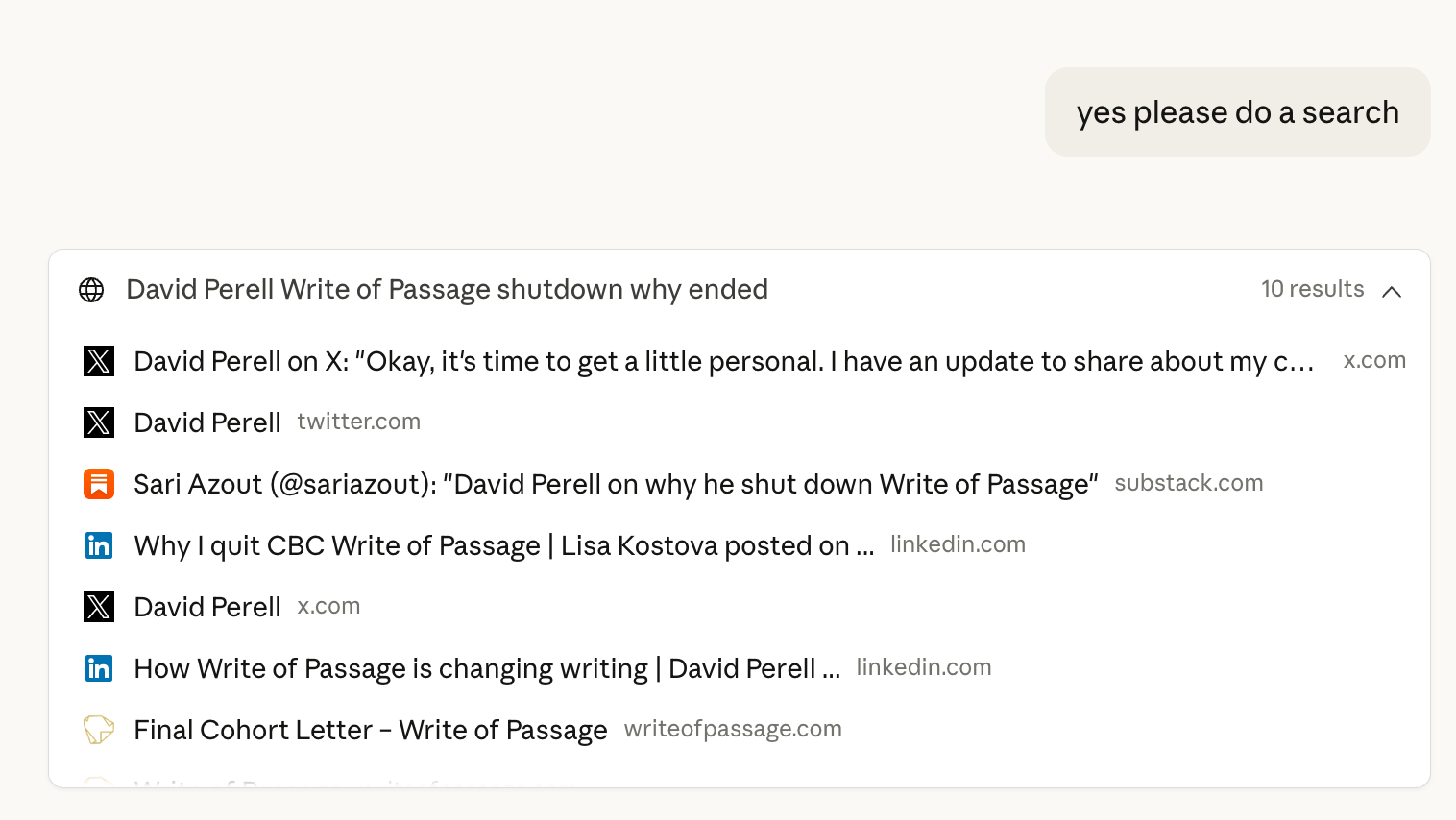
Paul’s note reminded me of why David Perell shut down Write of Passage.
AI is part of a bigger story which is that the internet is in a new era. Write of Passage was based on a simple idea: write consistently, get a following on social media, build an email newsletter, and your life will change. It worked. Our students had amazing outcomes. But then the internet changed, starting with TikTok. We went from a follower-driven graph to a content-driven algorithm. Instead of distributing content based on who follows you, platforms now look at the content itself and spread it to anyone who might be interested. This has caused the value of a follower to go way down. On Twitter, I have people with a fraction of my followers who get more impressions than me. On YouTube, what matters is your click-through rate and average view duration, not subscriber count. This meant that what we were teaching at Write of Passage was no longer an honest approach to success. Now, the way I approach writing is to think of a piece as an event.
— David Perell
Once you accept this reality, opportunities start to emerge.
I keep coming back to the concept of digital real estate.
I’m officially obsessed with micro-apps. Small and focused products that actually do something for people. There’s more leverage in building owned experiences that solve a specific problem and far less leverage in content alone.
My first experiment is going well: TechTwitter.com
The idea is simple. Turn the social media firehose into a library. Curation and multimodal discovery of the best tech-focused content on Twitter. It’s not just about saving people from doomscrolling; it’s a searchable archive optimized for learning rather than engagement. A utility people return to because it solves an acute problem.

New subscribers are a natural byproduct of delivering value before asking for anything. I’m investing in SEO and building domain authority as if it were an appreciating asset. Better search rankings, more clicks, more subscribers.

LLMs are checking domain authority when deciding what to reference, and humans are reviewing citations because they don’t trust outputs blindly. I always look at sources when I get answers from AI. I want to know where certain types of information are coming from, especially when I’m conducting research.
Domain authority isn’t as hard to build as you might think.
I grew the DA for Tech Twitter from 0 to 32 in a month by launching on directories and launchpads. It’s quite effective if you’re intentional about it.

The vision is to build a portfolio of these micro-apps. Small, useful products that compound in value through organic search and AI recommendations.
Digital real estate that appreciates.
Each micro-app will link back to indiethinkers.com, improving the domain authority of the main publication. This will draw more eyeballs to the original essays we publish here. I’m still figuring it out, but that’s the current play.
— Daniel
Here’s what to read this week:
Sunday

Monday

Tuesday

Wednesday

Thursday

Friday

Saturday

P.S. Which ecosystem would you choose?.
Really smart strategy Dan. Super interesting. Any specific launchpads that you thought worked particularly well? Thank you so much for featuring me as well. I was quite surprised to see my post listed. Appreciate you.
love the idea of TechTwitter.com !